AI Is Already Running Your Daily Life — This Guide Explains It Simply
A fun, visual, interactive step-by-step journey that makes Artificial Intelligence (AI) easy for everyone — from daily life and real uses to ethics, careers, and the future.
Fun stories, examples, and missions that help kids spot AI in games, apps, and daily life.
Clear explanations of models, data, ethics, and real projects for serious learners.
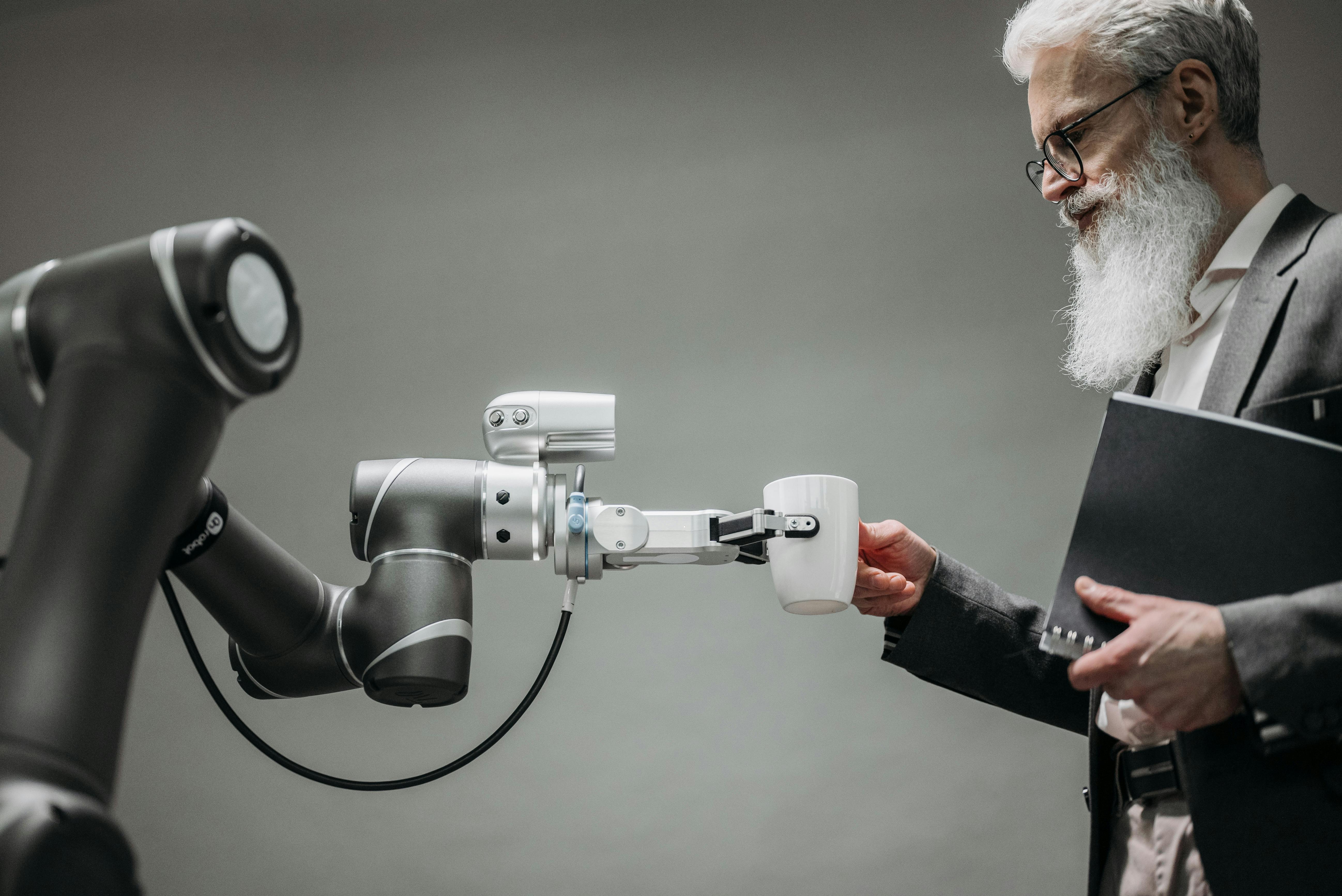
From filters and recommendations to subtitles and spam filters, AI tools quietly support many apps and services you use every day.
Kids Zone: Meet AI
This section explains AI in simple language and gives ideas for fun activities that help kids notice and understand AI in their world.
What is AI for kids?
AI is like a very fast helper that learns from many examples so it can recognize pictures, understand spoken words, or play games and get better over time.
Where kids see AI every day
- • Cartoons or videos suggested after you finish watching something.
- • Voice assistants that answer questions or set timers.
- • Camera filters that change your face or background in real time.
- • Games where computer players seem to learn your moves.
Mini-missions for curious kids
- • AI Spotter: Count how many times in one day you use something that makes a “smart guess”.
- • Talk to a bot: With an adult, test a kid-safe chatbot and notice what it does well and what it does not understand.
- • Teach a machine: Try a visual tool such as Teachable Machine or kids AI platforms to train a small model.
Safety rules for AI
- • Always ask an adult before sharing personal information with apps or websites.
- • Do not use AI tools to bully, cheat in school, or pretend to be someone else.
- • If an answer feels wrong or unkind, ask a trusted adult for help.


History of AI
AI has grown from early ideas about thinking machines to today’s generative models, with milestones in almost every decade since 1950.
Why AI history matters
Knowing the history helps people understand why some ideas return, why expectations rise and fall, and how to think critically about new claims.
Timeline missions
- • Teens can research one milestone and present it to friends or classmates.
- • Adults can compare current AI tools with older visions from books and films.
- • Families can talk about which predictions came true and which did not.
How AI Works (Simple to Deep)
Many AI systems learn patterns from data so they can make predictions, recognize images, or generate text.
Level 1 – Kids
Imagine a box that sees many pictures of cats and dogs. Over time it learns what shapes, colors, and patterns look more like a cat or a dog, so it can guess which is which.
- • Data = examples (pictures, text, sound).
- • Model = the “recipe” that learns from data.
- • Training = practice; prediction = using what was learned.
Level 2 – Teens
Supervised learning uses input–output pairs, unsupervised learning looks for structure without labels, and reinforcement learning learns by trial and rewards.
Neural networks stack layers of units so systems can build complex features from raw data, which is powerful for images, speech, and language.
Level 3 – Adults
Many systems combine large neural architectures, massive training datasets, and optimization methods such as stochastic gradient descent, plus infrastructure for deployment.
Generative models, including transformer-based language and diffusion models, are trained to predict the next token or denoise data, enabling text, code, and media generation.
The basic AI pipeline
- Define the task and goal.
- Collect and prepare data, watching for quality and bias.
- Choose and train a model on the training data.
- Evaluate on separate test data and monitor over time.
- Deploy responsibly with documentation and oversight.

Where AI Is Used Today
AI already appears across everyday tools, creative work, education, health, and industry, often working behind the scenes.
Everyday tools
- • Search suggestions and spell-check.
- • Maps, traffic, and navigation.
- • Video and music recommendations.
- • Camera improvements and filters.
- • Spam detection and security alerts.
Creativity & learning
- • Text, image, audio, and video generation tools.
- • Language learning apps and personalized practice.
- • AI-assisted coding and debugging helpers.
Science, health & industry
- • Medical imaging support and risk prediction.
- • Drug discovery and materials design.
- • Supply chain, finance, and energy optimization.
- • Climate and environmental modeling.
Learning Paths: Kids, Teens, Adults
Different ages and backgrounds need different starting points, and many free or low-cost resources support AI learning.
Kids (around 7–12)
- • Play with block-based coding tools such as Scratch.
- • Try visual AI tools like Teachable Machine or kids AI platforms.
- • Make simple pattern games and AI art with adult guidance.
Teens (13–18)
- • Learn Python and basic statistics, then build small ML projects.
- • Take beginner-friendly online AI courses and workshops.
- • Join competitions, clubs, or hackathons to apply skills.
Adults (all backgrounds)
- • Non-technical learners build AI literacy and safe tool use.
- • Technical learners deepen algorithms, deep learning, and deployment.
- • Everyone benefits from understanding ethics and limits.
Ethics, Safety, and Responsible AI
Ethics in AI focuses on fairness, privacy, transparency, and accountability so that systems serve people without causing avoidable harm.
Key ideas
- • Bias & fairness: AI can copy and even amplify unfair patterns in training data.
- • Privacy: Data collection and use should respect consent and legal protections.
- • Transparency: People should know when they are interacting with AI.
- • Accountability: Designers and deployers of AI systems should be responsible for their impact.
Practical tips
- • Check multiple sources instead of trusting one AI-generated answer.
- • Avoid sharing sensitive personal or financial data with AI tools.
- • Use AI to support decisions, not to replace your judgment entirely.

International groups and youth councils are drafting guidelines to protect children and support responsible AI adoption in education and society.
Future of AI: 2030–2040 and Beyond
Experts expect AI to influence productivity, jobs, education, health, and governance, with outcomes shaped by design choices and regulation.
2030: Deeply embedded assistants
By 2030, AI is likely to act as a common assistant in many jobs, helping with drafting, research, and analysis while people focus on strategy, relationships, and oversight.
2040: New collaboration patterns
Scenarios for the 2040s explore AI-supported science, more automation in transport and logistics, and ongoing debates about governance and coordination.
Jobs and skills
Studies suggest AI can raise productivity but may shift which skills are in demand, making adaptability and lifelong learning especially important.
Questions for families and classrooms
- • Which tasks should always stay under human control?
- • How should AI systems be tested before they affect many people?
- • What skills will matter most if AI tools become much more capable?
Hopeful and careful futures
Some visions focus on AI supporting health, climate solutions, and learning, while others warn about misuse and inequality. People of all ages can join conversations that shape these futures.
Careers and Skills in the Age of AI
AI is changing many jobs and creating new ones, while also increasing the value of human skills such as communication, empathy, and creativity.
Technical paths
- • Machine learning engineer, data scientist, or AI researcher.
- • MLOps, infrastructure, or AI platform engineering.
- • Robotics, computer vision, or natural language processing roles.
Non-technical paths
- • AI product management, design, or user research.
- • Policy, law, and governance related to AI deployment.
- • Education and communication about AI literacy.
Timeless skills
- • Critical thinking and problem framing.
- • Collaboration and communication across disciplines.
- • Ethical reasoning and a habit of learning over a lifetime.
Activity ideas
- • Kids can draw “jobs of the future” that combine people and AI.
- • Teens can interview adults about how technology changed their work.
- • Adults can map which parts of their job are routine and which are creative or relational.
Glossary: Key AI Words
This glossary offers kid-friendly and teen/adult explanations of important terms so families and classrooms can talk about AI with shared language.
Using this glossary
Families, teachers, and learners can pick a term, read it together, and then look for real-world examples. Over time, this builds comfort and confidence in talking about AI.